[Copper plated running duck to human pavilion clock]
Copper plated running duck to human pavilion clock During the Qianlong period in Guangzhou, the clock was 110 centimeters high, 59 centimeters wide, and 51 centimeters thick.
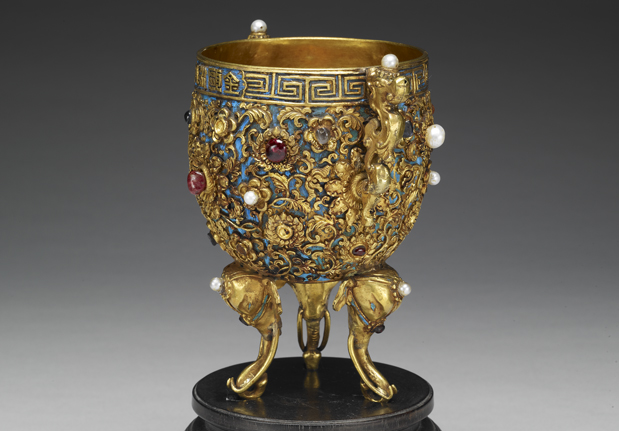
The clock was made of copper plated two-storey pavilions. The lower front carved board is decorated with stone flowers. There are three string holes on the clock dial, which are responsible for traveling, timing, and engraving. The small disk in the lower right corner is the weekly disk. The pointer moves one grid every day and rotates once every seven days. The small disc in the lower left corner is a music disc. Adjust the pointer to change different songs. The setting platform above the dial features a rural scenery of small bridges, flowing water, and ducks in the water. In the upper facade door, there are two tooth carving treasure donors, one holding the tower and the other holding the Buddha’s hand. Inside the railing outside the pavilion, there are a circle of people who look like foreigners.
![图片[1]-Bronze plated running duck to human pavilion clock-China Archive](https://chinaarchive.net/Warring States period/Clockwork instrument/53636[1024].jpg)
![图片[2]-Bronze plated running duck to human pavilion clock-China Archive](https://chinaarchive.net/Warring States period/Clockwork instrument/53635.jpg "铜镀金亭式跑鸭转人钟(局部)") 铜镀金亭式跑鸭转人钟(局部)
铜镀金亭式跑鸭转人钟(局部)![图片[3]-Bronze plated running duck to human pavilion clock-China Archive](https://chinaarchive.net/Warring States period/Clockwork instrument/53632.jpg "铜镀金亭式跑鸭转人钟(局部)") 铜镀金亭式跑鸭转人钟(局部)
铜镀金亭式跑鸭转人钟(局部)![图片[4]-Bronze plated running duck to human pavilion clock-China Archive](https://chinaarchive.net/Warring States period/Clockwork instrument/53633.jpg "铜镀金亭式跑鸭转人钟(局部)") 铜镀金亭式跑鸭转人钟(局部)
铜镀金亭式跑鸭转人钟(局部)![图片[5]-Bronze plated running duck to human pavilion clock-China Archive](https://chinaarchive.net/Warring States period/Clockwork instrument/53634.jpg "铜镀金亭式跑鸭转人钟(局部)") 铜镀金亭式跑鸭转人钟(局部)
铜镀金亭式跑鸭转人钟(局部)
![[Qing Dynasty] British female painter—Elizabeth Keith, using woodblock prints to record China from the late Qing Dynasty to the early Republic of China—1915-China Archive](https://chinaarchive.net/wp-content/uploads/2022/11/image-191x300.png)