[Zhang Cao Shu Song of Graduation]
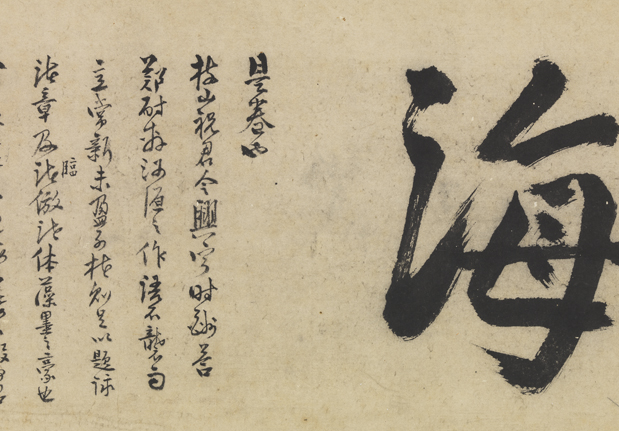
Song of Graduation volume, Sui people’s book, paper book, Zhang Cao Shu, vertical 21.2 cm, horizontal 29.1 cm
Explanations of “Ode to Graduation”
There is no money in this picture. There are 22 seals in the collection, including: the Sanskrit seal of Princess Taiping of the Tang Dynasty, “the mother of three contempt”, the “agreement” and “the seal of Shao Yue” of King Shao of the Tang Dynasty, and the “eternal treasure secret” of Wang Ya, the servant of the Tang Zhongshu (two seals); Song Gaozong’s “Shao”, “Xing” (Lianzhu seal), Song Neifu’s “book seal” (half seal) and “Neifu secretary’s seal”; The “Suoli Xuan Seal”, “Yongbao of the past dynasties”, “Liu Zhongshou”, “Liu Wan Private Seal”, “An Yuanzhong Seal” and the two indistinguishable seals of people before the Ming Dynasty; Qing Anqi’s “Yizhou Treasure”, the “Qianlong Imperial Treasure”, “Shiqu Treasure Collection”, “Leshou Hall Treasure Collection”, “Qianlong Appreciation”, “Sanxi Hall Precise Seal”, and “Yizi” seals in the Qing Dynasty
The postscript of Song Mi Youren on the back paper: “Song of the teacher on the right, Sui Xianshu, approved by Chen Mi Youren on April 7, 2009, Shaoxing.” The seal on the lower right is “the seal of the doctor in charge of calligraphy and painting”. The right seal contains six seals, including: “Wu” (half seal), “□ Xuan”, “□ □ Shanmu”, “Guxi Tianzi”, “Shou” and one seal without distinguishing. Zuo Jiancang has six seals, including “Anyi Zhou Family Treasure”, “Five Blessings and Five Dynasties Hall Treasure”, “Eight Symbols and Eight Concepts”, “Jiaqing Imperial Treasure”, “Xuantong Appreciation”, and “Wuyi Zhai Jingjian Seal”
The two characters “Jin Mo” in the seal script and the monogram “Wu” are introduced, and the seal “Yu Fu Book” is stamped on it. According to the monogram and seal, the predecessor determined it to be the Song Gaozong Book, which was actually imitated by the Ming Dynasty. There are also “Emperor Taishang”, “Shiqu fixed”, “Baoji recompilation”, and “Ningshou Palace continued to enter Shiqu Baoji” in the Qing Dynasty. On the left, the Emperor Qianlong Guisi (38th year, 1773) wrote a paragraph
In the front of the collection, there are: Ming Wang Shimao’s “Langya Wang Jingmei’s Collection of Books”, Qing Anqi’s “An”, “Yizhou Appreciation”, and Qing Neifu’s “treasure of eight symbols”. After the fifth anniversary of Qianlong’s reign (the 13th year, 1748), a section of the imperial inscription was sealed with the “Qian” and “Long” seals, and the “Lu Estate” was also sealed by the Qing’an Qijian Tibetan seal
This book can be found in the following books: Ming Dynasty Zhan Jingfeng’s “Xuanlan of the East Map”, Wang Shizhen’s “Yanzhou Mountain People’s Continuation”, Wu Qizhen’s “Calligraphy and Painting Record”, Sun Kuang’s “Calligraphy and Painting Postscript – Continuation”, Qing Dynasty Gu Fu’s “Life Spectacular”, An Qi’s “Ink Margin Collection”, Wu Sheng’s “Grand View Record”, “Shiqu Treasure Collection Continuation – Ningshou Palace”, Ruan Yuan’s “Shiqu Essays”, Sun Yue’s “Peiwenzhai Calligraphy and Painting Manual”, and Ni Tao’s “One of the Six Arts”. Carved into the Sanxi Hall Calligraphy
According to the description book and the seal of the collection, this book is called “Shaoxing Book” and “Ode to Graduation”. According to Mi Youren’s postscript, it is mostly classified as the book of Sui Xian, and it is also considered to be written by Suojing of the Western Jin Dynasty or Liang Xiaoziyun of the Southern Dynasty, and even by Tang people. The circulation is generally as follows: the Tang Dynasty was collected by Princess Taiping, Li Yue and Wang Ya successively; In Shaoxing years of the Southern Song Dynasty, he entered the inner government; Ming returned to Wang Shimao; It was collected by Anqi at the beginning of the Qing Dynasty, and then entered the Qianlong House; On the ninth day of November in the eleventh year of the Republic of China (1922), Puyi transferred out of the palace in the name of rewarding Pujie. After 1945, Puyi was scattered and hidden among the people for more than 60 years; In 2003, it was obtained by the auction company and bought back by the Palace Museum with a huge amount of money
The Song of Graduation, as an ink script of Zhang Cao, has two copies, one is “Shaoxing” and the other is “Xuanhe”. The latter has entered the Inner House of the Northern Song Dynasty, with the title of Song Huizong, “The Book of Sima Suojing to the West” and “Xuanhe”, which is generally designated as the book of Suojing in the Western Jin Dynasty, and also considered as the book of Liang Xiaoziyun. After the “Book of Xuanhe” of the Northern Song Dynasty, and the “Book and Painting Records of Qianshan Hall” of Ming Wenjia Bian Yongyu of the Qing Dynasty, and other books, such as “Collection of Paintings and Calligraphy in Shigutang”. Its spread is roughly as follows: the Northern Song Dynasty entered Xuanhe’s inner mansion, and the Ming Dynasty seemed to have turned from Yan Song’s home to Wenpeng’s hand, and then sold it to Xiang Yuanbian, but it did not exist after entering the Qing Dynasty. The “Xuanhe Book” was carved into Dong Qichang’s “Drama Hongtang Book”, and Wang Bingchun’s “Splash Ink Room Book” was also copied. Today, only the rubbings of the French calligraphy are available
The unknown passage of Shaoxing’s Song of Graduation is believed to be written by Suojing in the Western Jin Dynasty or Liang · Xiao Ziyun in the Southern Dynasty, or by Sui Xian or Tang Ren, which is not conclusive. According to the seal of Princess Taiping of the Tang Dynasty, Li Yue, Wang Ya and others in this painting, the writing will not be later than the early Tang Dynasty. According to Song Mi Youren’s postscript, “Sui Xianshu” should be more credible. This book is a typical early Zhangcao style. “Silkworm head and phoenix tail” has traces of official script, and “silver hook and tail” has cursive features. The overall style of the book is regular without losing its changes. It is vigorous and shows the natural flying trend. It is simple and elegant. It is the traditional style of standardized Zhangcao created since the Six Dynasties, with only a slight increase in the elegant trend. It is roughly similar to the cursive style in Sui Zhiyong’s “Thousand Characters of True Grass”. Therefore, it is appropriate to set it as Sui people’s book.
![图片[1]-Zhangcaoshu Graduation Ode Volume-China Archive](https://chinaarchive.net/Wei, Jin, Southern & Northern Dynasties/model calligraphy/s58e48cbe9c136.jpg)